
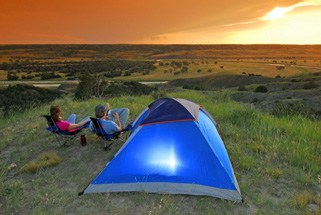
Camping for Beginners: What to Bring, How to Set Up and Where to Stay
The four kinds of camping, and which one you actually want
Camping gets used for everything from a festival tent in a field to five nights in the backcountry, and the gear list changes completely between them. Pick the type before you buy anything.
| Type | What it is | Gear reality |
|---|---|---|
| Car camping | Drive to a pitch, park beside it | Comfort wins: big tent, cooler, chairs, stove |
| Campground tent camping | Booked site with a pitch, water and usually a toilet block | Same as car camping, minus the need for privacy |
| Dispersed camping | Public land, no facilities, often no booking (US national forests and BLM land) | Everything you need comes with you, including water and a toilet plan |
| Backpacking | You carry it all and walk in | Weight dominates every decision; see the ultralight tent guide |
If this is your first trip, choose a booked campground. You get a defined pitch, water, a toilet and other people within shouting distance, which removes about 80 percent of the things that go wrong on a first night out.
How to plan a first camping trip
One night, close to home, in good weather
The first trip is a rehearsal, not a holiday. A single night within an hour of home means a bad night is an inconvenience rather than a disaster, and you can bail at 10pm without ruining the weekend. Check the forecast for the campsite itself, not your town: low ground is colder and riverside pitches are damper.
Pitch the tent first, and pitch it before dark
Arriving at dusk makes everything harder: guy lines get tripped over, the pitch is uneven, and the cooler sits in the car until morning. Get there with two hours of light, put the tent up first, then unload. If the tent is new, pitch it once in the garden before you go; every tent has one step that only makes sense when you are doing it.
Set up in this order
- Tent, with the door facing away from the prevailing wind and the ground sheet fully under the floor.
- Sleeping setup inside it: pad, then bag, then anything soft you want under your head.
- Kitchen away from the tent, downwind, with the stove on flat ground and nothing burnable above it.
- Chairs, table and a light for the pitch, so you are not holding a torch in your teeth after dark.
- Food into the cooler or a sealed box, and nothing edible left in the tent overnight.
Camping essentials: the gear that earns its space
You do not need everything in the shop. This is the list of things that a first trip actually depends on, in rough order of how much you would miss them. Most of it can be borrowed for trip one.
- ShelterA three-season tent sized for one more person than you are.
- Sleep systemPad with an insulated rating, plus a bag rated below the forecast low.
- Cook kitTwo-burner stove or a canister stove, pot, lighter, and a windbreak.
- Cooler and iceRigid cooler for car camping; blocks of ice last longer than cubes.
- WaterTwo to four litres per person per day, plus a container with a tap.
- LightHeadlamp each, plus a lantern for the table.
- ChairsOne per person. Sitting on a cooler gets old by the second hour.
- First aidPlasters, painkillers, tick removal, any personal medication.
- ToolsKnife, duct tape, a few spare pegs and cord.
- ClothesOne warm layer and a waterproof shell beyond what you are wearing.
Two things get left behind that should not: a tarp and a mallet. A tarp over the cooking area turns a wet evening into a normal one, and a mallet saves your hands on hard ground. Read the family tent guide before buying a tent, and the camping chair guide before buying a chair.
Camping packing list by trip type
This is the camping checklist we use, cut down for the two trips most beginners take. The right-hand column is what changes if you are carrying it instead of driving it.
| Category | Car camping | Backpacking |
|---|---|---|
| Shelter | 4 to 6 person tent, tarp, mallet | 2 person tent under 2.5 kg |
| Sleeping | Full pad, double bag, pillow | Inflatable pad, quilt or mummy bag |
| Cooking | Two-burner stove, fuel, pans, plates | Canister stove, one pot, one spork |
| Water | 20 litre container, bottles | Two bottles plus a filter |
| Food | Cooler with block ice | Dry and dehydrated meals only |
| Comfort | Chairs, table, lantern | None. Sit on the pad. |
For the full list with quantities, see what to bring on a hike for the walk-in side of it.
Camp kitchen, cooler and food safety
Cook simple on the first trip: one pot, one pan, food that does not need to be kept cold until the evening. A cooler keeps food safe for about as long as the ice lasts, and ice lasts much longer as blocks than as cubes. Keep the cooler out of the sun, closed, and drain the water rather than letting food sit in it.
Food safety at camp is the same rule as at home: keep cold food at or below 4C (40F) and do not leave anything perishable out for more than two hours. Our guide to camping food storage temperatures has the specifics, and how much ice you need has the quantities by cooler size.
Never cook inside a tent. Carbon monoxide from a stove or a smouldering fire is the single most serious risk in family camping, and it kills people every year in tents and RVs. If it is raining, cook under the tarp or eat cold.
Staying warm and dry
Cold at night is almost always a ground problem, not a bag problem. The ground pulls heat out of you far faster than the air does, so an insulated pad matters as much as the sleeping bag rating. Buy the pad first.
- Bag rating: pick a bag rated 5 to 8C below the forecast low, and remember ratings assume a thermal base layer.
- Ventilation: tents get damp from breath. Leave a vent open even when it is cold; condensation is what makes a morning feel freezing.
- Dry clothes: sleep in a separate dry base layer, never in what you wore around the fire.
- Hot water bottle: a filled bottle in the bag ten minutes before bed is worth more than a thicker jacket.
For the detail, read how to stay warm in a tent.
Camping with kids
Children change the trip in three ways: they need more sleep, more snacks and more daylight activity than adults do. Pick a campground with a toilet block, take a tent bigger than the headcount, and plan the day so the hardest part, dinner and bedtime, happens before everyone is overtired. Things to do while camping with kids has the daytime covered.
The mistakes first-timers actually make
- Buying gear before the first trip. Borrow or hire a tent for one night.
- Arriving in the dark. Everything takes twice as long after sunset.
- Forgetting the pump, mallet or pegs. An unusable tent is a very long night.
- Underestimating cold. The forecast low is usually at 5am, when you are asleep and the ground is coldest.
- Cooking in the tent. Carbon monoxide. Never.
- Leaving food out. It attracts animals and spoils faster than you think.
- Booking one night, far away. Keep the first trip short and close.
Camping gear guides worth reading before you buy


Best Camping Chairs
Seat height, packed weight and frame strength across rockers and packable seats.


More camping guides on this site
- Largest Tents for Camping
- Ultralight Tents for Backpacking
- Best Camping Hammocks
- Portable Camping Showers
- Ice Fishing Shelters
- Camping Food Ideas
- Camping Food Storage Temperatures
- How Much Ice for a Cooler
Camping for beginners: quick answers
What do I need for my first camping trip?
A tent with a ground sheet, an insulated sleeping pad, a sleeping bag rated below the forecast low, a stove and fuel, a cooler with ice, water, a headlamp, chairs, a first aid kit and one warm layer each. Borrow the tent and chairs for trip one.
How much does a first camping trip cost?
Campground fees are usually 15 to 45 US dollars a night for a tent pitch. If you buy nothing, food and fuel are the only real costs. A complete first-timer kit bought new typically runs 400 to 900 US dollars, and most of that is the tent and sleeping gear.
Do you need to book a campsite in advance?
At popular parks in summer, yes, often weeks ahead. State and national park campgrounds increasingly require reservations. Dispersed camping on public land is usually free and unbooked, but has no facilities at all.
What do you do if it rains while camping?
Pitch a tarp over the cooking area, keep the tent door closed, and expect condensation. Never cook inside the tent. If the forecast is severe, the correct answer is to cancel; a wet night is fine, a storm is not.
How cold is too cold for tent camping?
With a properly rated bag and an insulated pad, three-season camping works down to around freezing. Below that you need a four-season tent, a warmer pad and experience. Never test a cold rating for the first time on a family trip.
Can you camp for free?
Yes, on US public land. Bureau of Land Management and many national forest areas allow dispersed camping at no cost, usually limited to 14 days in one spot. You bring water, a toilet plan and pack out everything.
Nature Sport Central is reader-supported. When you buy through links on this site we may earn an affiliate commission at no extra cost to you, and it never changes which products we recommend. Where we recommend specific products, we have compared published specifications and owner reports rather than claiming hands-on testing we did not do. Read the affiliate disclosure or contact us with a correction.